GPHG 2026: What the Grand Prix d'Horlogerie de Genève Means for Collectors
Tonight, Geneva hands out the watch world's most closely watched honours. The 26th edition of the Grand Prix d'Horlogerie de Genève (GPHG) holds its awards ceremony on Saturday, 7 November 2026 at the Bâtiment des Forces Motrices (BFM), with the evening livestreamed on gphg.org and followed closely by Hodinkee and Haute Time. According to Hodinkee, proceedings begin around 6:30pm CET, or 12:30pm ET — and, in a quiet but telling first, this is the first year the ceremony is conducted entirely in English.
We are writing on the day itself, before the envelopes are opened, so this is not a winners roundup. It is something more useful for a collector: a guide to what the GPHG actually rewards, how the 2026 reforms change the meaning of an award, and how to read the nominee list as a buying lens for Pre-Loved (Certified) timepieces long after tonight's applause has faded.
The scale of the 2026 field
The numbers explain why the prize carries weight. Per GPHG Foundation press materials, 194 brands entered 320 models, from which the Academy nominated 84 timepieces across 14 categories. Those nominees compete for 19 prizes, culminating in the Aiguille d'Or Grand Prix, the golden needle that crowns the single most accomplished watch of the year.
How the result is decided matters as much as who wins. The jury, chaired this year by Wei Koh, does not judge from photographs: its members physically evaluate the nominated pieces in Geneva. As both the GPHG and Hodinkee explain, the jury's vote counts for two-thirds of the final result, while the Academy's digital vote supplies the remaining third. It is a structure that rewards watches which reveal more, not less, when held in the hand.
A breath of fresh air: the 2026 category reforms
In April, the Foundation announced its most significant restructuring in years in a press release titled "A breath of fresh air for the 2026 edition."
- Gender gives way to function. The former Men's and Ladies' categories have been replaced by Essential Watch and Complication Watch. A watch is now judged by what it does and how well it does it, not by an assumption about who will wear it.
- Gem-setting gets its own stage. A new Gemset category welcomes pieces carrying up to 6 carats of stones, while Jewellery is now reserved for the most exceptional creations.
- Unique pieces, narrowly admitted. One-of-a-kind models are accepted only in Jewellery Watch and Mechanical Clock, keeping the remaining categories focused on watches a collector could, in principle, actually acquire.
- The Iconic Watch Prize opens to the whole market. It now considers contemporary reinterpretations of icons whose influence has lasted more than 20 years — whether or not they were officially entered.
- A broader Special Jury Prize. Beyond honouring a person, it can now also recognise a brand for significant development or for its work in ethics and sustainability.
Alongside these, the two price-capped categories remain the most democratic in the competition. As Haute Time notes, Petite Aiguille covers watches priced between CHF 4,500 and 10,000, while Challenge is reserved for watches at CHF 4,500 or less.
What the reforms mean for collectors
For anyone building a collection, the shift from gendered to functional categories is the headline. A refined time-only watch and a demanding complication are different propositions, each best measured against its peers. When you evaluate a Pre-Loved (Certified) watch, the same discipline applies — ask whether it is an essential piece executed with exceptional restraint, or a complication whose mechanism justifies its presence on the wrist.
The new Gemset category is equally instructive. By separating confidently set watches from true high jewellery, the GPHG acknowledges that diamonds on a bezel and a fully paved masterpiece are not the same achievement. Collectors drawn to the jewelled watches of houses such as Cartier can borrow that distinction: judge the quality of the setting, the matching of stones and how gracefully the gems serve the design, rather than the carat count alone.
Perhaps the most collector-relevant change is the opened Iconic Watch Prize. By looking across the entire market at reinterpretations of designs with more than two decades of influence, the GPHG is effectively endorsing a principle familiar to anyone who buys at the top of the market: enduring design is itself a form of value. Maisons like Patek Philippe built their reputations this way, refining rather than reinventing.
Using the nominee list as a buying lens
A GPHG nomination is not a price signal, and we would caution against treating it as one. What it offers is a curated, expert-vetted shortlist of where watchmaking is heading.
- Look for lineage. When a nominated watch reinterprets an earlier icon, the original that inspired it is often the more interesting acquisition — and frequently available as a Pre-Loved (Certified) piece with its full story intact.
- Follow the makers, not just the models. Independent watchmaking has long found recognition in Geneva. Repeated nominations signal consistency of craft.
- Use the price caps as a benchmark. The Petite Aiguille and Challenge categories show what exceptional execution looks like at accessible levels. Hold a Pre-Loved (Certified) candidate in that bracket to the same standard of finishing and legibility.
- Prioritise verified condition. Whatever draws you to a reference, authentication, service history and honest condition grading remain the foundation of a sound purchase.
See the nominees in person
The jury's insistence on physical evaluation is a lesson worth taking literally. Per the GPHG, the nominated pieces have toured on a roadshow that included Mumbai (with Ethos) and Bangkok, and are on display in Geneva at the Musée d'Art et d'Histoire from 29 October to 15 November. The exhibition then travels to Watches of Switzerland in London from 18 to 23 November, this time with the prize-winning models. Seeing finishing up close will sharpen your eye for every watch you consider afterward.
A weekend that belongs to Geneva
The ceremony also lands in the middle of Geneva's autumn auction week, with Phillips' Geneva Watch Auction: XXIV taking place on 7–8 November. We previewed those sales in detail in our Geneva Watch Auction Week guide. The auction rooms show what collectors value in watches already made; the GPHG shows what the industry believes deserves to be valued next.
The LuxyVerse view
Whatever the jury decides tonight, the 2026 reforms have already delivered their message: watches should be judged on function, craft and lasting design rather than on convention. That is precisely the standard we apply to every Pre-Loved (Certified) piece we offer. Let the GPHG nominees sharpen your eye, then choose the watch that will still feel right in twenty years.
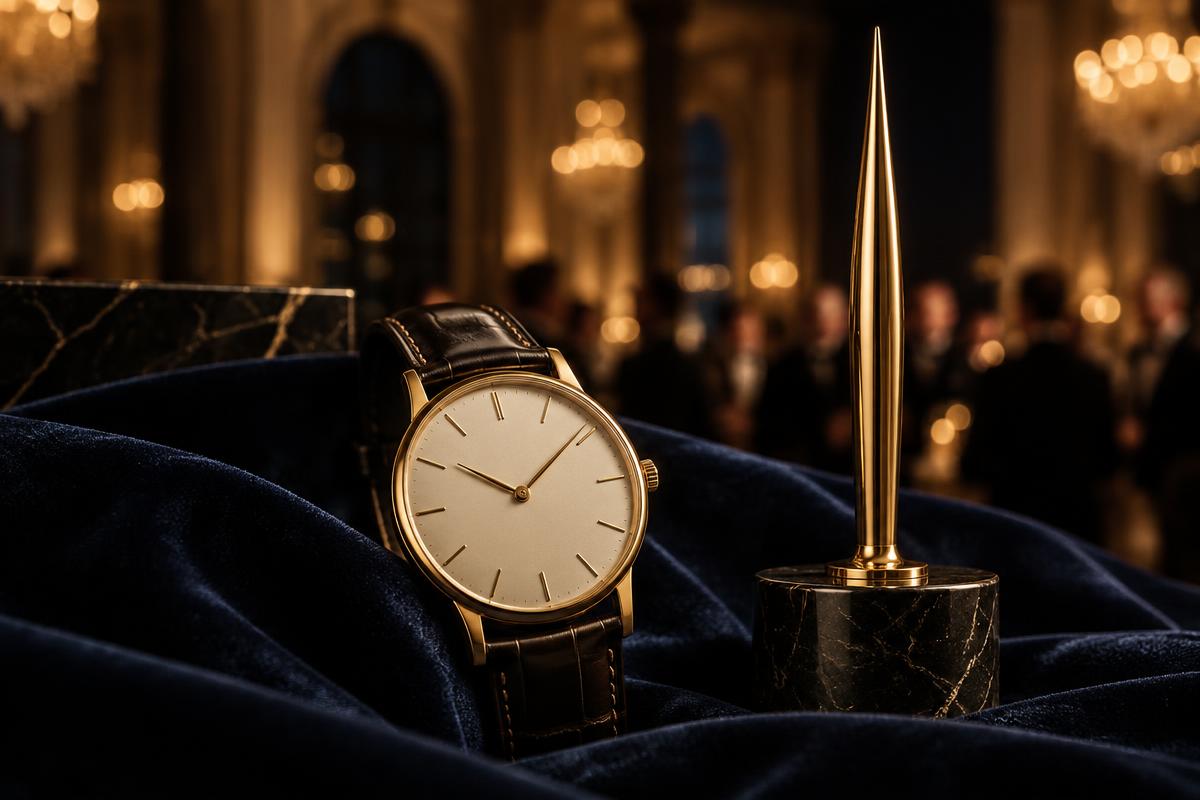
A note on imagery: the featured image is a brand-neutral, AI-generated illustration of a Geneva awards evening and does not depict any specific nominated or prize-winning watch.
Sources: GPHG Foundation press materials, including the April 2026 release "A breath of fresh air for the 2026 edition"; Hodinkee; Haute Time.