Signed Jewels Shine: What October's Auctions Say About Fine Jewelry Value
October's jewelry auctions offer a useful distinction between the value of a material and the value of a finished jewel. A diamond can be described by its weight, color and clarity; gold has a quoted price. A signed piece asks a broader question: what does the house, the design and the object's history add? The month's reporting suggests that collectors are paying attention to all of these layers, without abandoning restraint about price.
From Van Cleef & Arpels rings in Paris to Bulgari designs at Christie's, familiar signatures have been prominent. For buyers considering Pre-Loved (Certified) fine jewelry, the lesson is not that a famous name guarantees a result. It is that authorship belongs alongside craftsmanship, condition and documentation when judging a piece.
Paris: strong signatures, measured results
According to Rapaport's October 11, 2026 report, Sotheby's Paris Fine Jewelry sale on October 8 totaled EUR 5.9 million, about $6.6 million, with lots from Cartier, Boucheron and Buccellati. Its leading result was a Van Cleef & Arpels ring set with a rectangular step-cut 16.01-carat, J-color, VS2 diamond. It sold for EUR 409,600, about $458,858, narrowly above its EUR 400,000 high estimate.
The other reported highlights underline why the estimates matter. A Cartier ring with a radiant-cut 8.67-carat fancy intense yellow VVS1 diamond achieved EUR 140,800, within its EUR 110,000–170,000 estimate. A Van Cleef & Arpels ring with a marquise-cut 5.54-carat D VVS1 diamond made EUR 102,400, within its EUR 80,000–140,000 estimate. These are strong results, but not evidence of indiscriminate bidding. The largest ring just cleared its upper estimate; the others found buyers within their expected ranges.
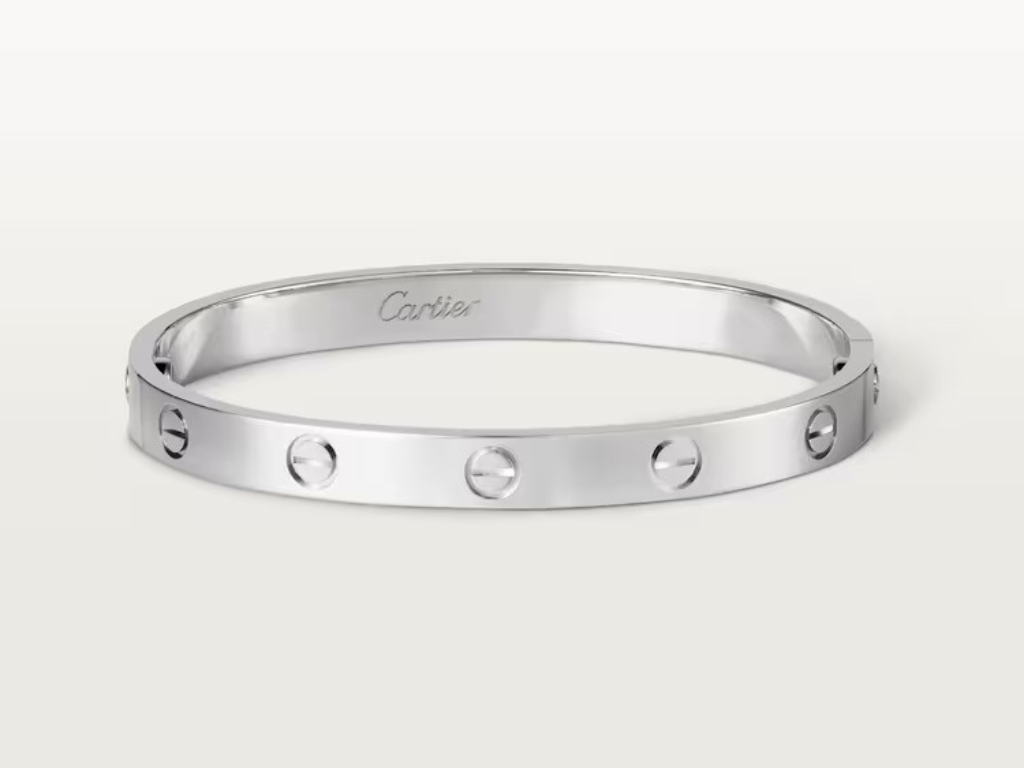
For someone exploring Cartier at LuxyVerse, that distinction is worth retaining. A signature helps frame the object, but the stone, setting and state of preservation still require their own assessment. A successful sale is a fact about a particular jewel, not a price promise for every piece bearing the same name.
Boucheron and the breadth of a house's archive
Katerina Perez's jewellery news adds another dimension to the Paris sale. More than 40 archival Boucheron objects from a single European family were offered at Sotheby's on October 8, spanning the late nineteenth to the early twenty-first century. The group included photo frames and cigarette cases, extending the conversation beyond jewelry worn on the body.
The same reporting notes that Boucheron became the first major jewellery house on Place Vendome in 1893. The collection's significance lies in how it invites a buyer to consider a house through its objects rather than its name alone. A family grouping provides context; a frame or case directs attention toward workmanship and design. The report describes an offering, however, not a result for every object, and should not be read as one.
Christie's: the pull of recognizable design
In its coverage of Christie's Jewels Online, which closed October 15, JCK described more than 250 lots. The top lot was an 8.17-carat D-color Internally Flawless round brilliant diamond ring, estimated at $250,000–$350,000. That figure is an estimate, not a reported selling price.
Bulgari alone accounted for more than 30 lots, including Naturalia, Parentesi and Monete designs. Cartier, David Webb, Tiffany & Co. and Van Cleef & Arpels also featured. JCK observed that “brand names do much of the heavy lifting”. It is a concise description of the attention a recognizable house can bring to a sale, rather than proof that the name overrides everything else.
For collectors browsing Bulgari pieces, the practical question is which design feels compelling beyond its signature. Proportion, comfort and the relationship between metal and stones make a jewel worth living with. JCK also noted that Christie's will offer more in its Magnificent Jewels and Jewels Online sales in December; those future offerings are not completed sales.
Gold near $4,200: material value is only one layer
JewelersTrend's October 16 trade wrap reported that spot gold printed $4,165.55 per ounce on Thursday, October 15. It also reported central-bank purchases of about 63 tonnes in September, the most since November 2024. In diamonds, smaller stones led the Rapaport index higher in September, while the one-carat index recorded a second consecutive monthly gain.
Gold's price makes the material content of a substantial bracelet or necklace especially relevant. Yet a finished jewel is not simply bullion shaped for the wrist. Its alloy, metal weight, construction, condition and authorship all deserve attention. A spot quotation cannot, on its own, establish the fair price of a gold-heavy piece or guarantee what a future buyer will pay.
The next Milan offering illustrates that distinction. Rapaport reported on October 15 that Sotheby's Milan Fine Jewelry and Watches sale on October 28 will offer more than 300 lots. Leading it is a 1965 sapphire-and-diamond ribbon necklace, with about 35 carats of sapphires and about 55 carats of diamonds, carrying a high estimate of EUR 300,000. The estimate describes expectations for a complete jewel, not merely its component materials.
Buying a signed jewel with clarity
When comparing Pre-Loved (Certified) fine jewelry, begin with the signature and maker's marks, but do not stop there. Ask how those marks have been assessed and whether the construction is consistent with the attribution. Original boxes and papers can provide useful context; their presence should complement, not replace, independent authentication.
Then look closely at condition. Examine clasps, links, stone settings and signs of repair, and ask whether alterations have changed the piece. Documentation is most valuable when it helps explain the object in front of you. LuxyVerse's Authenticity Promise sets out its approach to inspection, giving buyers a place to begin those questions.
October's message is quietly persuasive: signatures matter, materials matter, and the individual jewel matters most. Choose for design and the pleasure of wearing it, with a clear understanding of authenticity and condition. Neither an auction headline nor a gold quotation makes jewelry a guaranteed investment.
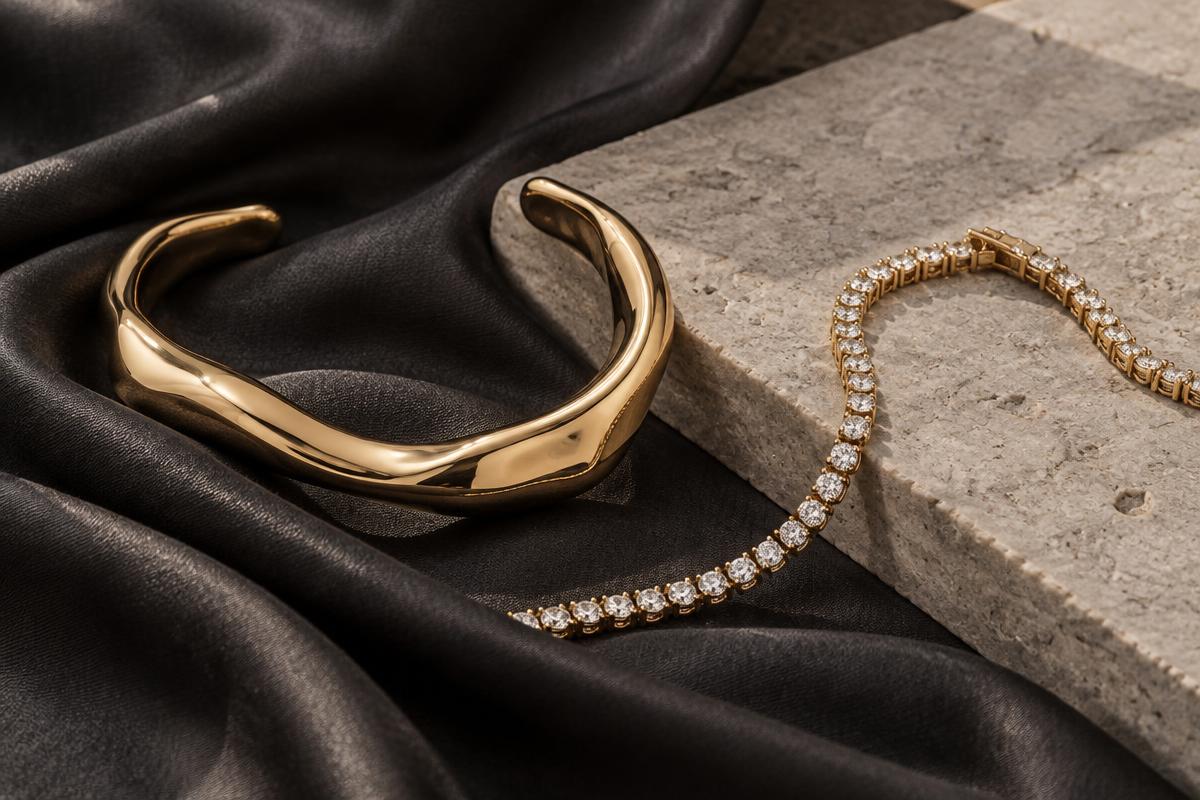
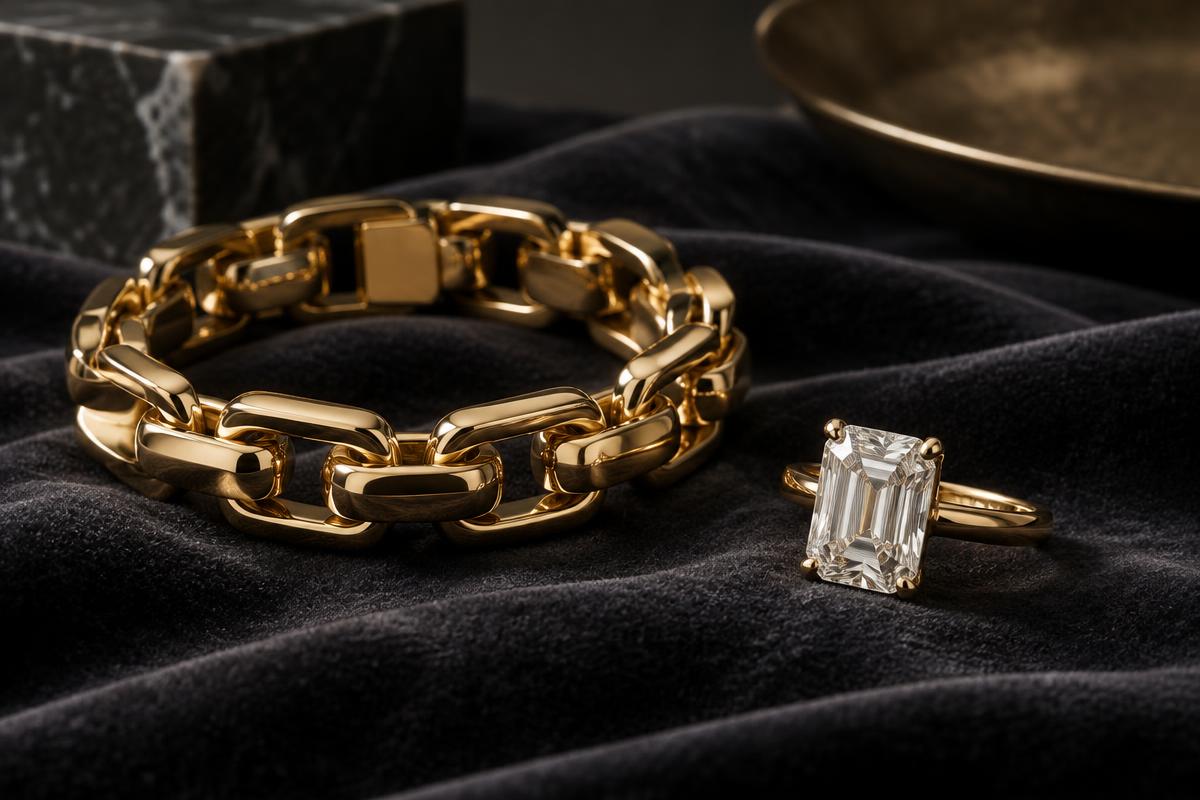
Featured image: an original AI-generated, brand-neutral jewelry still life; it does not depict products from any of the houses or auction lots mentioned.