Autumn 2026 High Jewelry: The Season of the Colored Stone
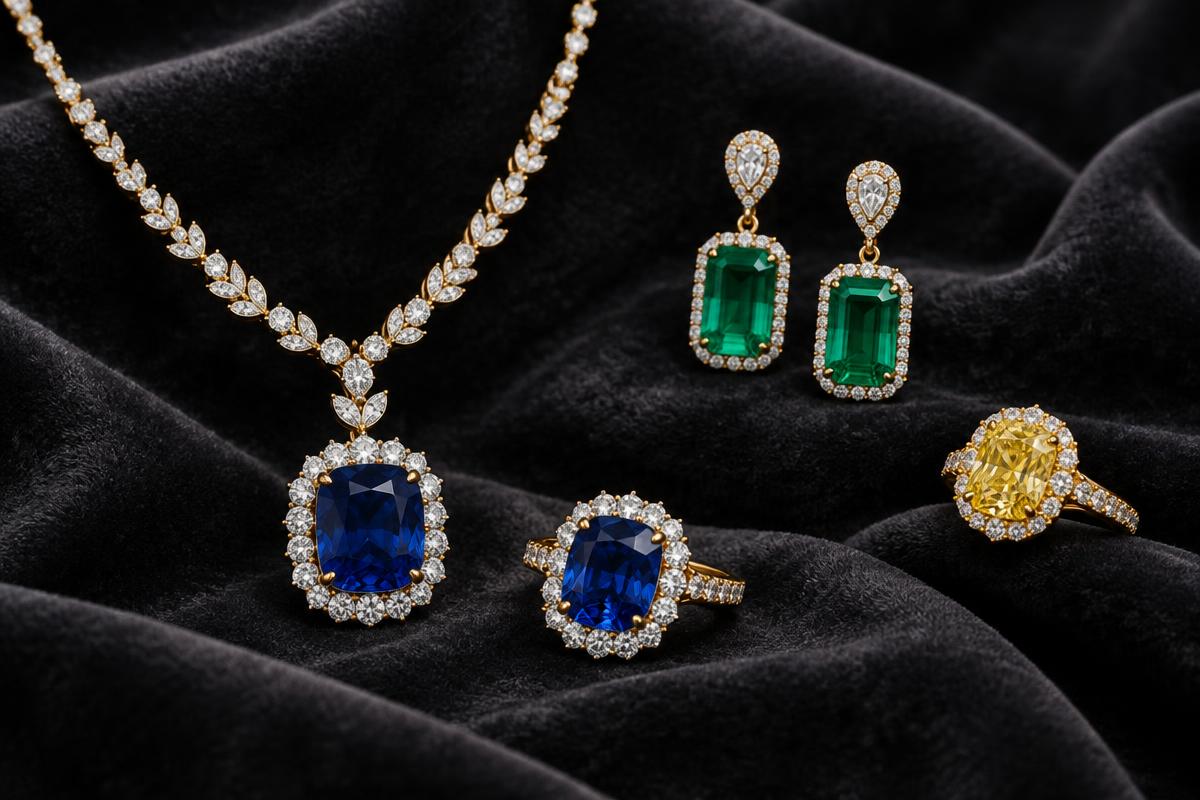
In autumn 2026 the mood in high jewelry has shifted unmistakably toward color. Not the careful single-stone accent of recent years, but color taken in quantity: sapphires the size of a thumbnail, sugarloaf emeralds, yellow diamonds the colour of late afternoon, and a blue diamond small enough to wear four ways. Across collections unveiled in Paris and London, and a sale about to open in Paris, houses and auction rooms are making the same argument: the most interesting thing a jewel can do right now is carry a serious, saturated stone.
Audemars Piguet goes where the bracelet leads
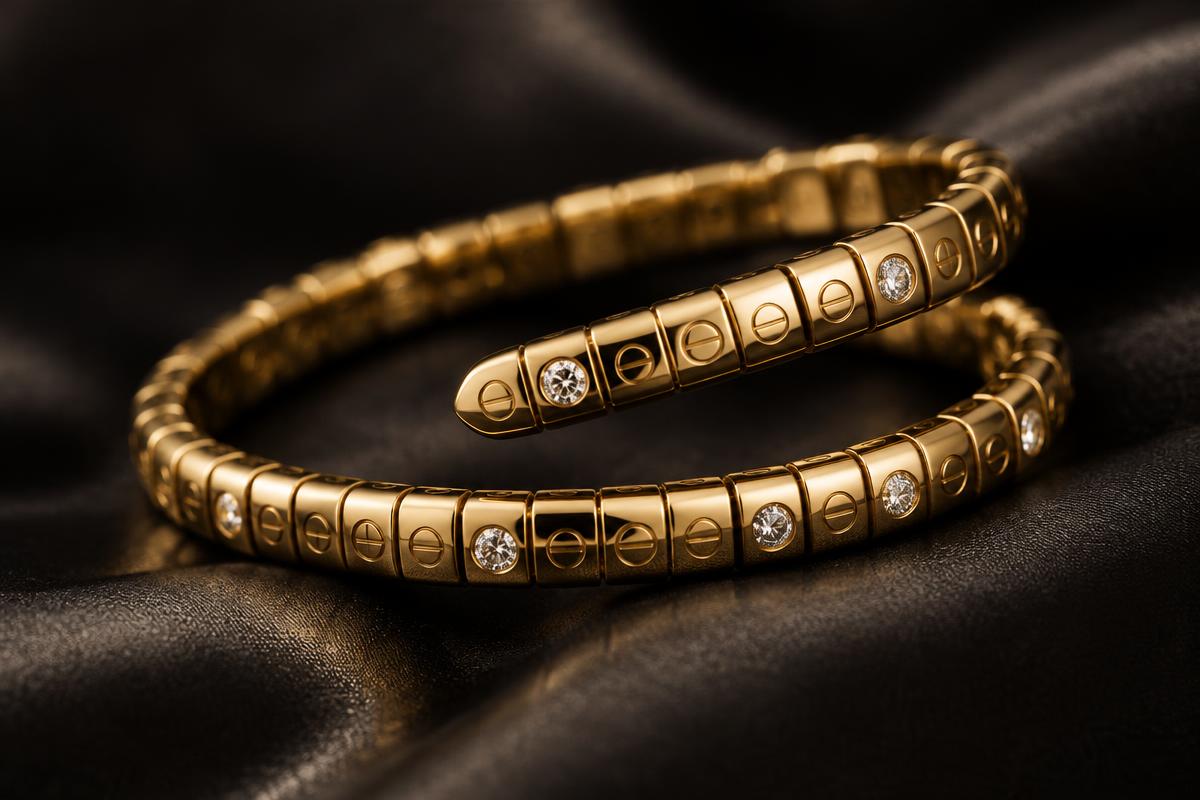
On 2 October, Audemars Piguet debuted its Royal Oak high jewellery collection — the house's first genuine foray into fine jewellery, as reported by JCK (Karen Dybis, 2 October 2026). The offering is compact: earrings, cuffs, a choker and two necklaces, codesigned by Nathalie Barzilay of Audemars Piguet. Three lines give it shape — Haute Joaillerie Risoud Eclipse, Dream of Joux and Frosted Gold — and the organising motif is the sculpted-link pattern of the Royal Oak bracelet, a form that nods to the Vallée de Joux, where the company started in 1875.
The Times, in its "Six luxury jewellery updates for autumn 2026" (16 October 2026), filled in the detail. Dream of Joux is presented as one-of-a-kind cuffs set with vibrant gemstones. Risoud Eclipse pairs blackened titanium and white gold with sugarloaf emeralds and diamonds, the cabochon cut giving the stones a soft, rounded intensity rather than a faceted sparkle. Frosted Gold takes the same bracelet geometry and turns it into chokers and cuffs in textured gold. Chief executive Ilaria Resta has said in media reports that it will showcase one-of-a-kind pieces rather than a volume-driven approach — the only sensible posture for a watchmaker entering high jewellery, where rarity is the product.
What is notable is the route: the house extended a language that already existed in the bracelet, then let color in through the emeralds. For a collector, that coherence matters.
Graff, Pragnell and the case for the big stone
If Audemars Piguet represents design-led color, Graff represents the stone itself. The Times reports a new high jewellery necklace built around an unheated Sri Lankan cushion-cut sapphire of 118.17 carats, framed by diamonds, with a three-carat pear-shaped diamond suspended beneath. Unheated is the operative word: a sapphire of that weight whose colour was never coaxed out of a furnace is a different order of object from one whose saturation was improved by heat.
Pragnell has worked the other way up the spectrum, launching statement rings around vivid African yellow diamonds, the largest a 25.19-carat cushion-cut cut from a rough stone of more than 53 carats. Fancy colour is unforgiving arithmetic: the rough dictates the finished weight, and the fall from more than fifty-three carats to twenty-five is the price of cutting for brilliance over size.
The Times also pointed to Fope, the Vicenza house founded in 1929, for its Flex'it jewelry — a reminder that not every autumn story is about carats. Its tiny gold springs between the links let gold move like cloth. Color sells the headline; craft keeps a piece in daily use rather than in the safe.
De Beers London, and water as a subject
Vogue Arabia (27 October 2026) covered De Beers London's Vibrations high jewellery collection, unveiled during London Fashion Week and inspired by moving water in the countries where the house sources its diamonds. The collection runs in four chapters — Echo, Cascade, Shimmer and Undulation — and the Echo chapter, drawn from Namibia's Fish River Canyon, centres on a transformable necklace built around a 1.12-carat Fancy Intense Blue diamond that can be worn as a necklace, a tiara, a bracelet and a pair of earrings.
A blue diamond of that intensity is a rarity far beyond its carat weight, and transformability is a functional idea with a long history in high jewellery: pieces that disassemble were made for women whose evenings had more than one hour. It is also how a house tells a sourcing story: rivers, canyons, moving water, and the stones that come out of them.
Paris, and what the auction room is asking
The same appetite is visible in the saleroom. JCK (26 October 2026) reported that Bonhams' Paris jewelry sale on 29 October is led by a Kat Florence necklace set with an 81.17-carat natural Paraíba tourmaline, estimated at €60,000 to €80,000. Alongside it sit two sapphires that make the untreated point plainly: a Chaumet ring with a 12.5-carat Sri Lankan sapphire estimated at €45,000 to €65,000, and a Cartier ring with an 11.5-carat Madagascar sapphire estimated at €40,000 to €60,000 — with Bonhams reporting no evidence of heating on either.
Also in the sale, and worth more to many buyers than any headline lot: a Cartier rosebud brooch of circa 1940 set with rubies, emeralds and diamonds, estimated at €15,000 to €20,000, from the collection of the milliner Madame Paulette. Signed, dated, documented and attainable — a counterweight to a hundred-carat sapphire.
What a collector should take from this
Three lessons run through the season.
Treatments are the first question, not the last. Heat treatment is permanent, widely accepted and — critically — it changes price. An unheated Sri Lankan sapphire and a heated one of similar appearance are not the same purchase. Where an auctioneer states "no evidence of heating," as Bonhams does for both of its Paris sapphires, that statement is doing real work — and it should be backed by a laboratory report naming the stone and its findings.
Signed pieces behave differently. A Cartier ring or a circa-1940 Cartier brooch carries authorship, and authorship lets a jewel be discussed, dated and resold on terms an unsigned piece never enjoys. Design and provenance — who owned it, what papers exist — are the difference between a jewel with a market and a jewel with a price.
Papers and provenance are not paperwork. A report, an original invoice, a known owner: each is evidence, and evidence converts a beautiful object into a sound one.
None of this requires a sale-room paddle. The route most collectors take into signed, colored-stone jewelry is the secondary market, and the sensible version of it is buying through a source that authenticates what it sells — the standard set out in our Authenticity Promise. LuxyVerse's Pre-Loved (Certified) jewelry is examined and verified before it is offered: the practical way to own a signed piece — a Cartier bracelet, a sapphire ring — without the auction premium or guesswork. Browse the jewelry collection to see what is available now.
Color is back, and the houses are saying so with unusual directness: emeralds on blackened titanium, a 118-carat unheated sapphire, a blue diamond that becomes four jewels, and a Paris sale led by a Paraíba tourmaline. What separates a passing fashion from a lasting one is whether the stones underneath are honest. This season, the emphasis on untreated color and documented provenance asks collectors to look closely — which is exactly what they should do.
Featured image: an original AI-generated still life of colored gemstone jewelry, created for The Verse. It depicts no specific brand, house or model.