Diamond Stud Earrings for the 2026 Holidays: Lab-Grown vs Natural
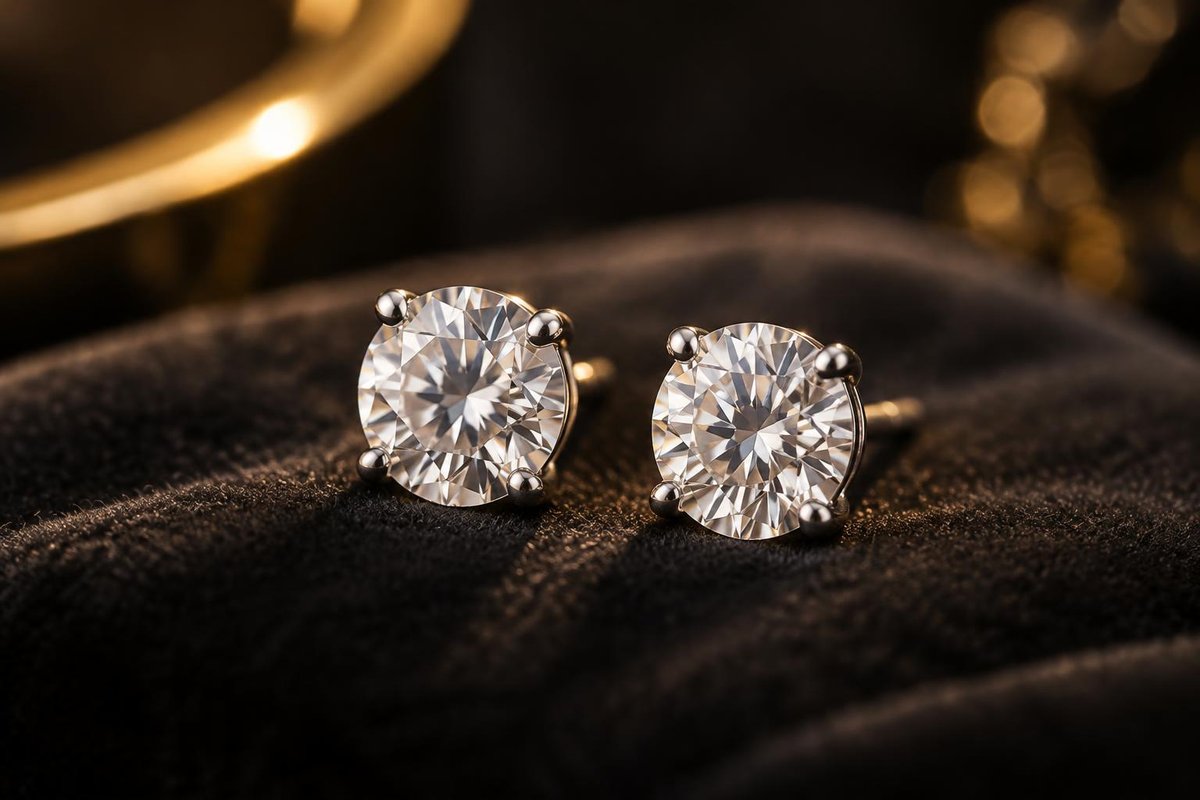
Every holiday season produces its headline jewels, but the piece most likely to be unwrapped, worn the next morning and still worn a decade later is rarely the showiest. It is the pair of diamond studs: two stones, two settings, no argument. Studs suit a first fine-jewelry gift and a twentieth anniversary equally well, they move from boardroom to dinner without a second thought, and they ask nothing of the wearer except a mirror.
This year the quiet essential arrives with an unusually loud set of numbers behind it. The market data published in the weeks before the 2026 holidays says a great deal about how people are buying diamonds, and about the choice that now sits at the centre of almost every stud purchase: lab-grown or natural.
Why studs are the season's quiet essential
Studs are the rare jewel that needs no styling decision. They frame the face rather than decorate it. That simplicity is exactly why they reward careful buying: with so little metal and design between you and the stones, the quality of the diamonds themselves is the whole story.
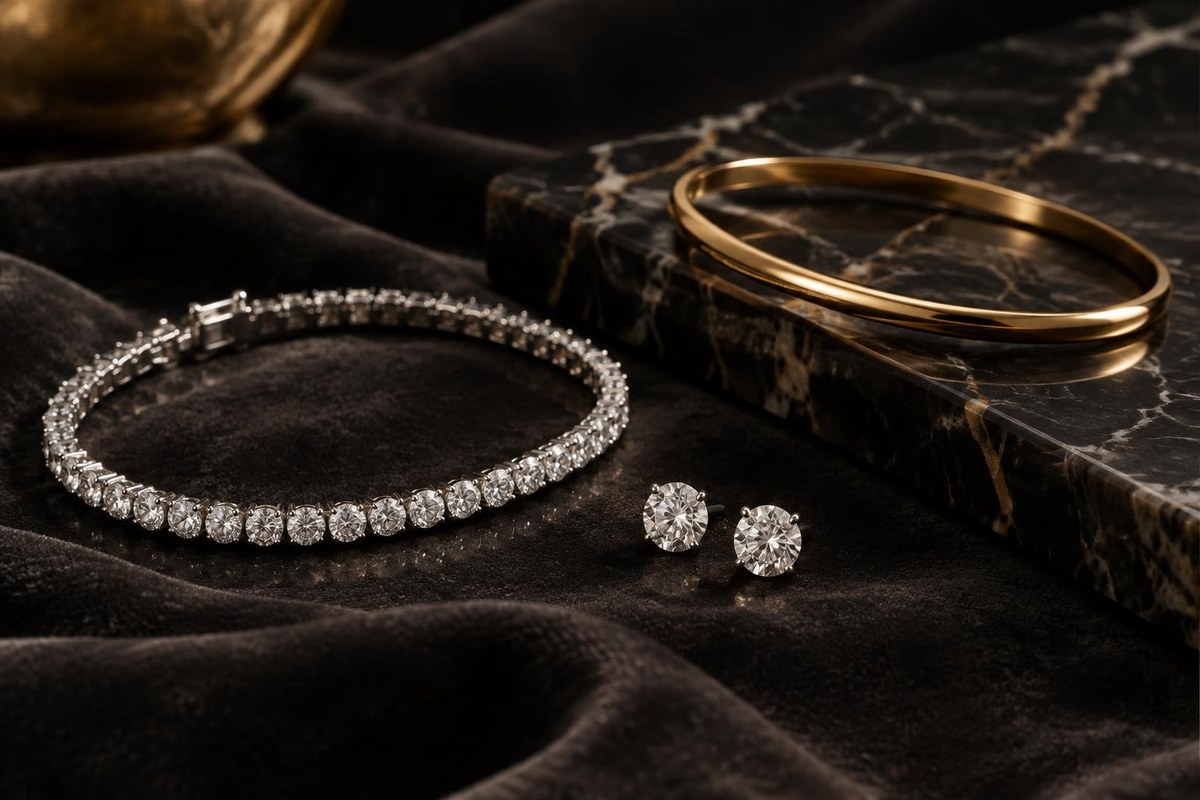
It is also why studs sit so comfortably at the top of the gifting list. According to Tenoris, which tracks jewelry sales, stud earrings ranked among the top sellers in lab-grown diamond jewelry over the past year, alongside engagement rings and tennis bracelets.
What the numbers say: lab-grown momentum
Tenoris's holiday forecast for 2026 describes a category still gaining ground. Unit sales of jewelry set with lab-grown diamonds rose 22% in the past year, with the strongest activity in the $1,500 to $5,000 bracket and an average of about $2,000 per item. Tenoris expects lab-grown jewelry to outperform most categories this holiday season.
The longer view points the same way. JCK, reporting on 3 November 2026 on a study by industry analyst Edahn Golan, put global retail sales of lab-grown diamond jewelry at an estimated $23.8 billion in 2025. At U.S. specialty jewelers, lab-grown unit sales rose 25% in 2025, and lab-grown-set jewelry accounted for 20.5% of diamond jewelry units but only 15.4% of revenue. That gap between share of pieces and share of spending is the clearest summary of the lab-grown proposition: more jewelry, at lower prices per piece.
Pricing explains why. JewelersTrend, reviewing early-November retail listings (10 November 2026), found that a 1-carat lab-grown diamond averaged $545, against $3,770 for a 1-carat natural diamond.
There are signs of firmness at the wholesale level, but they are modest. Golan's Q3 2026 lab-grown wholesale price list, published on 7 October and reported by Champ., showed round 1 to 3 carat lab-grown stones about 2% dearer than in Q2. Golan was careful not to overstate it: "The recovery is not broad-based, and year-over-year pricing remains significantly below prior levels."
Natural diamonds and the case for rarity
Natural diamonds are not standing still either. Tenoris expects natural diamond jewelry priced at $2,500 and above to rise 3% to 5% in units year over year this holiday. Overall holiday revenue is expected to grow, Tenoris adds, though likely not by anything near 8%.
The natural market's own price signals are mixed by size. As JewelersTrend noted, Rapaport's October index showed 0.30 carat natural goods down 5.5%, 0.50 carat down 2.3%, 1 carat down 0.9%, and 3 carat up 0.9%.
What a natural diamond offers is not a forecast but a fact of origin: it formed in the earth over geological time and exists in finite supply. For many buyers, that is the point of a diamond at all. For others, a lab-grown stone with the same chemistry and sparkle at a fraction of the price is the more sensible gift. Our guide to mined diamonds versus lab diamonds sets out the differences in full. The only mistake is not knowing which one you are buying.
How to choose a pair
Think in total carat weight, then look at each stone. Studs are usually described by the combined weight of both diamonds. Halve that figure in your mind to picture what each ear will actually wear, and compare pairs on that basis rather than on the headline number.
Match the stones. A pair should read as a pair. Color and clarity should be consistent across both diamonds, and the stones should be close in size and face-up diameter, so neither looks brighter, warmer or larger than its partner when you turn your head.
Put cut first. On the ear, diamonds are seen at a distance and in motion, so brilliance does more work than a fractional gain in weight. A well-cut stone will look livelier and often larger than a poorly cut one of the same weight. If the vocabulary is new, our guide to the 4Cs of diamond quality is the place to begin.
Choose the setting for how she lives. Four-prong settings are the classic choice, holding a round stone securely and letting in plenty of light. Three-prong settings show slightly more of the diamond and give a softer, more triangular outline. A bezel setting wraps the stone in a rim of metal for a sleek, modern look and the most protection, at the cost of a little light and a little visible size.
Mind the backs. Push-backs are quick and familiar; screw-backs thread onto the post and are the more secure option for larger or more valuable stones, or for anyone who has ever lost an earring.
Pick the metal. 14k gold is harder-wearing for everyday pieces, 18k gold is richer in color and purity, and platinum is dense, naturally white and especially good at holding prongs securely. Our comparison of platinum versus white gold covers the trade-offs for white settings.
A note on certification
Whatever you choose, ask for a grading report from a recognized laboratory, ideally one for each stone. The report records the diamond's carat weight, color, clarity and cut, and it states whether the stone is natural or laboratory-grown. For a pair, read the two reports side by side to confirm the stones are genuinely matched. Keep the reports with the earrings for insurance, servicing and any future resale.
The gift that stays
Studs are a small object carrying a large decision, and this season's data makes the choice clearer than ever. Lab-grown offers striking size for the budget and is still gaining momentum; natural offers rarity and an origin that cannot be replicated. Decide which matters more to the person opening the box, then buy cut, matching and setting with care.
Browse New and Pre-Loved (Certified) diamond earrings at LuxyVerse, with complimentary shipping on every order.
Sources: Tenoris (holiday jewelry sales forecast 2026); JCK (3 November 2026), reporting on research by Edahn Golan; Edahn Golan's Q3 2026 lab-grown wholesale price list (7 October 2026, as reported by Champ.); JewelersTrend (10 November 2026), including Rapaport's October index. The featured image is brand-neutral and AI-generated; it does not depict any specific product.