The Last Argyle Pinks: What Boodles' Stewardship Means for Pink Diamond Collectors
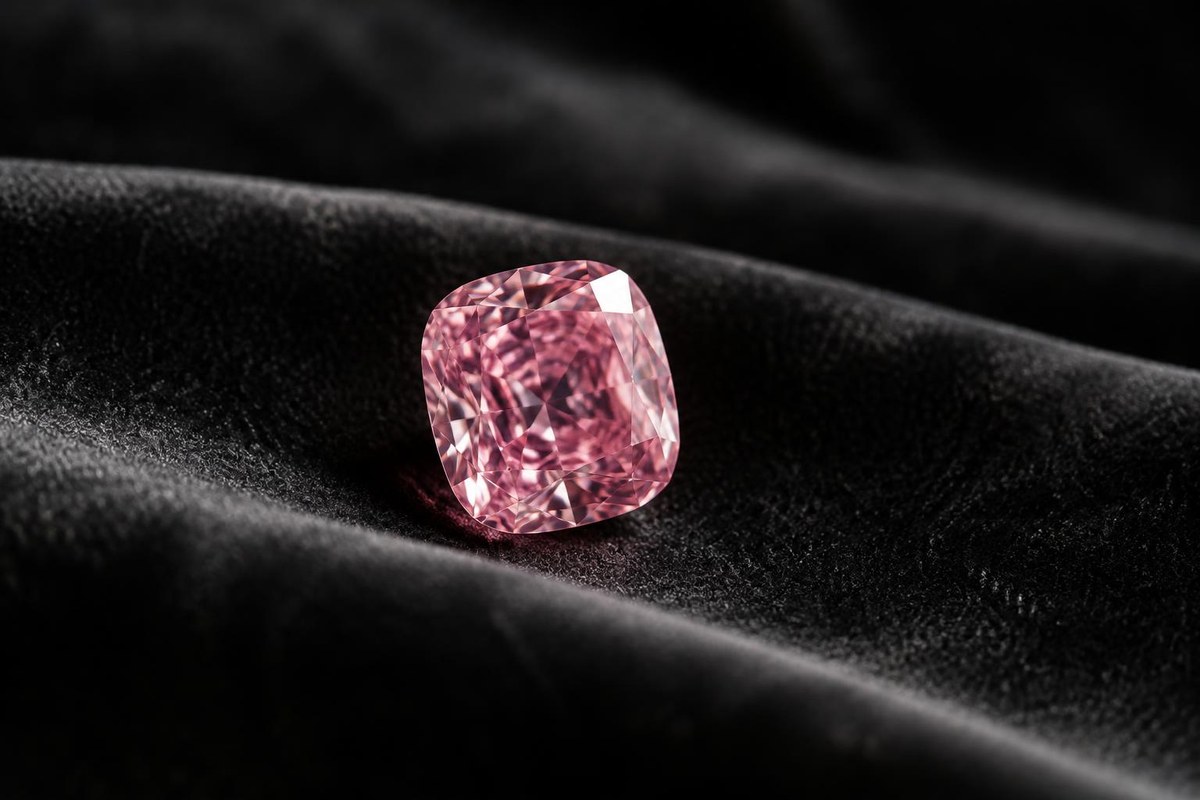
Some stories in the diamond world are about what is found. This one is about what is left. On 1 October 2026, Rio Tinto announced that ownership of the Argyle Pink Diamonds brand had transitioned to Boodles, the family-owned British luxury jeweller. According to Rio Tinto's press release, Boodles acquired the last remaining Argyle pink diamond inventory together with the brand's trademarks, website and digital marketing assets, with the transition completed on 1 October 2026.
It is a quiet handover with an outsized meaning. The Argyle mine, in the East Kimberley region of Western Australia, was the world's first and only significant source of pink diamonds, producing more than 90 per cent of world supply before production ended on 3 November 2020. Whoever holds the last of its pinks holds, in a very literal sense, the end of a supply that cannot be renewed.
The handover
Rio Tinto describes Boodles as a family-owned company with 228 years' experience, and the fit is closer than a press-release courtesy. As the Financial Times reported (Kate Youde, 1 October 2026), Boodles adopted pink as its brand colour in 2004 and bought its first Argyle pink diamond back in 1998. Pink diamonds now account for 5 per cent of the jewellery Boodles makes by volume — a remarkable share for stones this rare, and evidence of a relationship built over decades rather than assembled for an acquisition.
"We are incredibly proud and honoured to be entrusted with the future of Argyle Pink Diamonds brand," said Jody Wainwright, Boodles' Managing Director, in the Rio Tinto announcement. The word entrusted is doing real work there: this is less a purchase of stock than a transfer of custody over a finite chapter of diamond history.
Just how rare is an Argyle pink?
The numbers, as reported by the Financial Times citing Rio Tinto, are stark. Over its life, the Argyle mine produced 865 million carats of rough diamonds. Less than 0.1 per cent of that total were pinks. Even within a mine famous for colour, the pink crystals were a rounding error — and yet they came to define it.
The market that formed around them was equally unusual. The best stones were historically sold through an annual invitation-only tender, with private viewings of 50 to 70 stones and sealed bids. It was a ritual closer to an art sale than a commodity market: a small room, a small number of stones, and buyers asked to commit without knowing anyone else's number.
A decade of slow release
Neither party disclosed the scale or value of the inventory Boodles acquired, and that discretion is itself informative. What Wainwright did tell the Financial Times is how the house intends to handle it: he called the acquisition a "10-year-out investment", with enough stones to release "slowly over 10 years". His framing of the individual stones was blunter still: "Each one is like a Picasso."
The comparison is apt in both directions. Like a great painting, an Argyle pink is a finished edition — no more will be made. And like a careful estate, the value of the whole is protected by releasing the parts gradually rather than all at once. For collectors, the practical consequence is that new-to-market Argyle pinks will appear in a measured trickle, through one jeweller, for years to come.
What this means for collectors
Pink diamonds are graded differently from white diamonds, and buying them well means understanding that difference. GIA grades fancy colour diamonds by hue, tone and saturation, assigning intensity terms that run from Fancy Light through Fancy and Fancy Intense to Fancy Vivid. These are not decorative adjectives; they are graded bands, and each step up the scale represents a meaningful step in rarity. With pinks, colour is the value — clarity and size matter, but they serve the hue rather than the other way around.
Provenance matters more here than in almost any other corner of the diamond world. An Argyle pink is not merely a pink diamond; it is a pink diamond from a specific, closed, documented source. That origin is part of the object, and it should be part of the paperwork. Certification from a recognised laboratory, confirming natural colour origin, is the baseline; beyond it, any documentation tying a stone to the Argyle mine and its tender history is worth preserving as carefully as the stone itself. As our guide to the 4Cs of diamond quality explains, a grading report is the foundation of any serious diamond purchase — with fancy colours, it is also the proof of what makes the stone rare.
Scarcity, finally, is the whole story. The mine is closed. The supply is fixed. The remaining inventory now sits with a single steward that has said, on the record, that it will release stones slowly over a decade. Collectors should not expect abundance, and should be wary of anyone promising it.
The wider picture
The transition arrives at a moment when fancy coloured diamonds are commanding unusual attention across high jewellery. De Beers London's new Vibrations collection, unveiled in October 2026, builds entire chapters around pink, green and blue fancy diamonds — including a pair of pinks from the now-depleted Argyle mine itself. We covered that collection, and what it signals about the market's turn toward colour, in our report on De Beers London Vibrations.
For most buyers, an Argyle tender stone will remain something to admire rather than acquire. But the lesson of the pink diamond generalises well: buy colour on certification, buy rarity on documentation, and buy from sources that can account for every step of a stone's journey. That holds whether the stone is a museum-grade pink or a beautiful fancy-coloured diamond at a more reachable level. Browse our New and Pre-Loved (Certified) diamond rings and diamond earrings for pieces chosen on exactly those principles.
The Argyle mine gave the world nearly all of its pink diamonds and then closed its gates. The last of them are now in the care of a family jeweller that has loved pink for decades and plans to let them go slowly. For collectors, that is about the best ending a finite treasure can have — and a reminder that in diamonds, as in art, the rarest things are the ones no one can make any more of.
Sources: Rio Tinto press release, "Argyle Pink Diamonds brand transitions to Boodles" (1 October 2026); Financial Times (Kate Youde, 1 October 2026). The featured image is brand-neutral and AI-generated; it does not depict any Argyle stone or Boodles jewel.