De Beers London Vibrations: Why Collectors Are Looking Beyond White Diamonds
High jewellery has spent the last few seasons rediscovering colour, and few houses have a more natural claim on the subject than De Beers London. In October 2026 the house unveiled Vibrations, its new high jewellery collection, in London. As Harper's Bazaar Arabia reported (Charlie Boyd, 13 November 2026), the collection is inspired by the waterways and landscapes that give the house its gems: Botswana, South Africa, Canada, and the Fish River Canyon in Namibia.
Vibrations is organised into four chapters — Echo, Shimmer, Cascade and Undulation — and each one is built around a different kind of colour. Taken together, they make a clearer argument than most seasonal launches: the interesting conversation in diamonds is no longer only about size and clarity in white stones.
The four chapters
Echo is the chapter with the most theatrical ambition. Its centrepiece is a necklace set with a 1.12 carat Fancy Intense Blue diamond sourced in Namibia, and the piece transforms into six separate jewels, among them a tiara, a bracelet and a pair of earrings. Tiaras, says Emmanuelle Nodale, CEO of De Beers London, "continue to hold a special place in high jewellery." This one is notable for what it carries: it is the first tiara in a collection to include roughs, "creating a dialogue between the diamond in its natural state and its most highly polished expression."
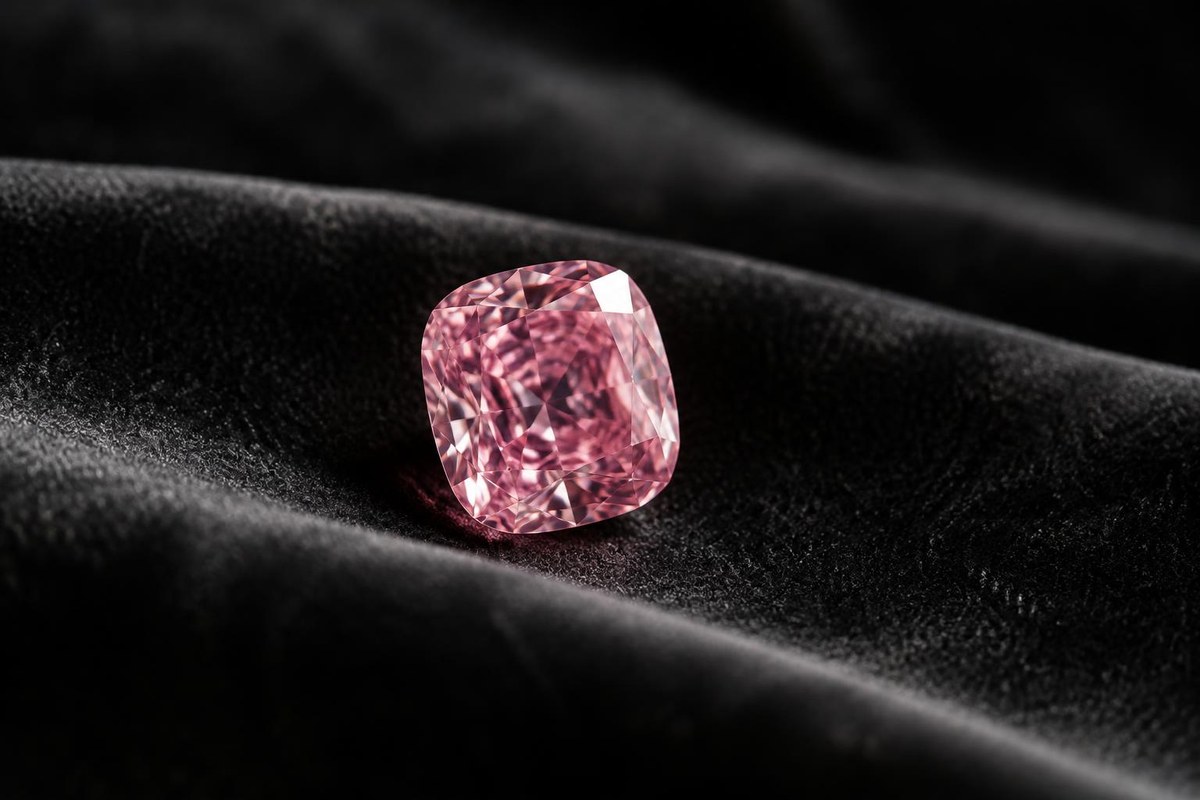
Shimmer takes its cue from Arctic frostflowers on Canada's Ellesmere Island — the feathery ice patterns that form on frozen ground. The chapter is a suite built around four rare Fancy Pink diamonds, including a pair from the now-depleted Argyle mine, the Australian source that spent decades supplying the world's most coveted pinks before it closed.
Cascade is an ode to South Africa's Tugela Falls, one of the tallest waterfalls on earth. It gathers four creations that pair diamonds with blue chalcedony, a hardstone the house brings into its repertoire for the first time. The effect is a softer, more diffused blue than a diamond can produce alone, and it gives the white stones something to sit against.
Undulation celebrates Botswana's Okavango Delta, the inland river delta that spreads rather than flows to the sea. Its six designs feature rare green diamonds, the rarest colour family of all. Nodale's own framing puts the scarcity plainly: "For every 10,000 Fancy coloured diamonds discovered, only around ten display a natural green hue."
Roughs, riverbeds and the cabochon diamond
Beyond the four chapters, Vibrations draws on rare alluvial diamonds recovered from ancient riverbeds in Sierra Leone, shown in both rough and polished form. It also introduces cabochon diamonds — stones cut as smooth domes rather than faceted gems.
That last decision is the most instructive for anyone who buys diamonds. "It took five years of development to bring this innovation to life, and fewer than 0.5 per cent of diamonds meet the exacting colour and clarity criteria required," Nodale says. The reason is unforgiving geometry: without facets to hide inclusions, a cabochon diamond must withstand scrutiny from every angle. A faceted stone can scatter light through its own structure and forgive a great deal; a cabochon cannot. It asks the crystal itself to be exceptional.
The move is consistent with a longer arc. De Beers London has built a reputation for distinctive cuts and natural-state stones since launching its Talisman collection in 2005. Vibrations reads as that project maturing rather than pivoting: roughs and cabochons are not novelties here, they are the house's way of insisting that a diamond's character is not the same thing as its sparkle.
A wider turn toward colour and movement
De Beers was not alone that week. Bulgari brought its Eclettica high jewellery collection to the United States with a gala in Palm Beach, a collection that includes 15 transformable high-jewellery masterpieces (Galerie Magazine, 13 November 2026). Mouawad unveiled Olive Crown (A&E Magazine, 13 November 2026), whose Imperial necklace features 28.96 carats of emeralds, 17.22 carats of chrysoprase and 34.36 carats of diamonds.
Put the three launches side by side and the shared themes are hard to miss: saturated colour in mixed stones, and pieces that change shape rather than presenting one fixed face. Transformability — a necklace becoming a tiara, a pendant, a pair of earrings — has moved from curiosity to expectation at the top of the market.
What collectors should take from this
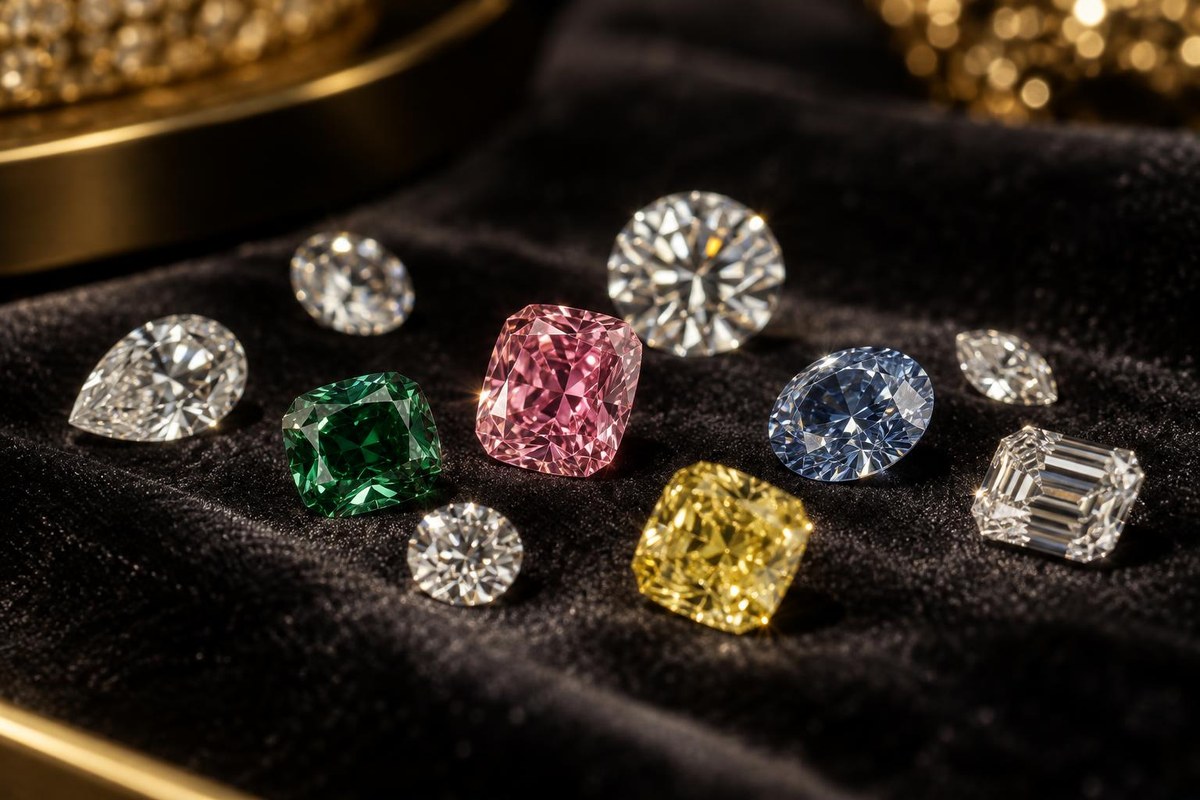
Fancy coloured diamonds are a different purchase from white diamonds, and the diligence changes with them. A few habits are worth keeping in mind.
First, insist on a grading report from a recognised laboratory, and read it for natural colour origin. Colour can be introduced by treatment; the report is what distinguishes a colour the crystal acquired in the ground from one applied later. Second, learn the intensity vocabulary. Terms such as Fancy, Fancy Intense and Fancy Vivid are not marketing adjectives — they are graded bands, and the difference between them is a difference in rarity. Third, treat provenance as part of the object: for stones tied to a particular mine or source, documentation and origin story carry real weight, which is precisely why houses now name the rivers, deltas and canyons behind their stones.
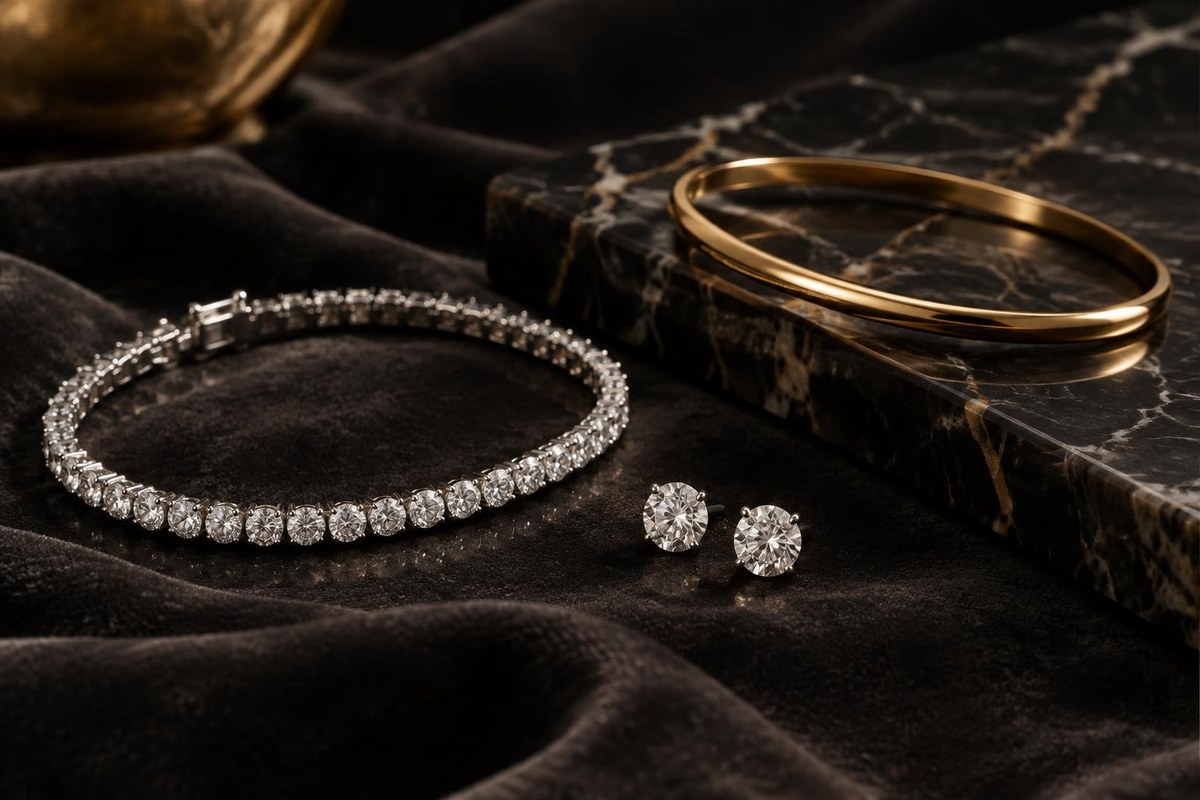
And then the balance. Colour is the moment, but white diamonds remain the foundation of most fine jewellery wardrobes. They are the stones that carry an engagement ring, a pair of studs, a tennis bracelet, a line of everyday pieces — the things worn rather than admired. A well-chosen coloured stone is most compelling when it sits among good white diamonds, not instead of them.
That is the practical place to start. Browse New and Pre-Loved (Certified) diamond engagement rings, or look at diamond necklaces and pendants for pieces that work day to day. For the fundamentals behind any stone, our guides to the 4Cs of diamond quality cover what a report can and cannot tell you, and our roundup of autumn 2026's coloured high jewellery sets Vibrations in the wider season.
Colour is back at the top of high jewellery, and the houses are proving it with roughs, cabochons and stones measured in single-digit percentages of the world's supply. Collectors, meanwhile, are being handed a more interesting question than "how large and how clear": what kind of diamond do you actually want to live with?
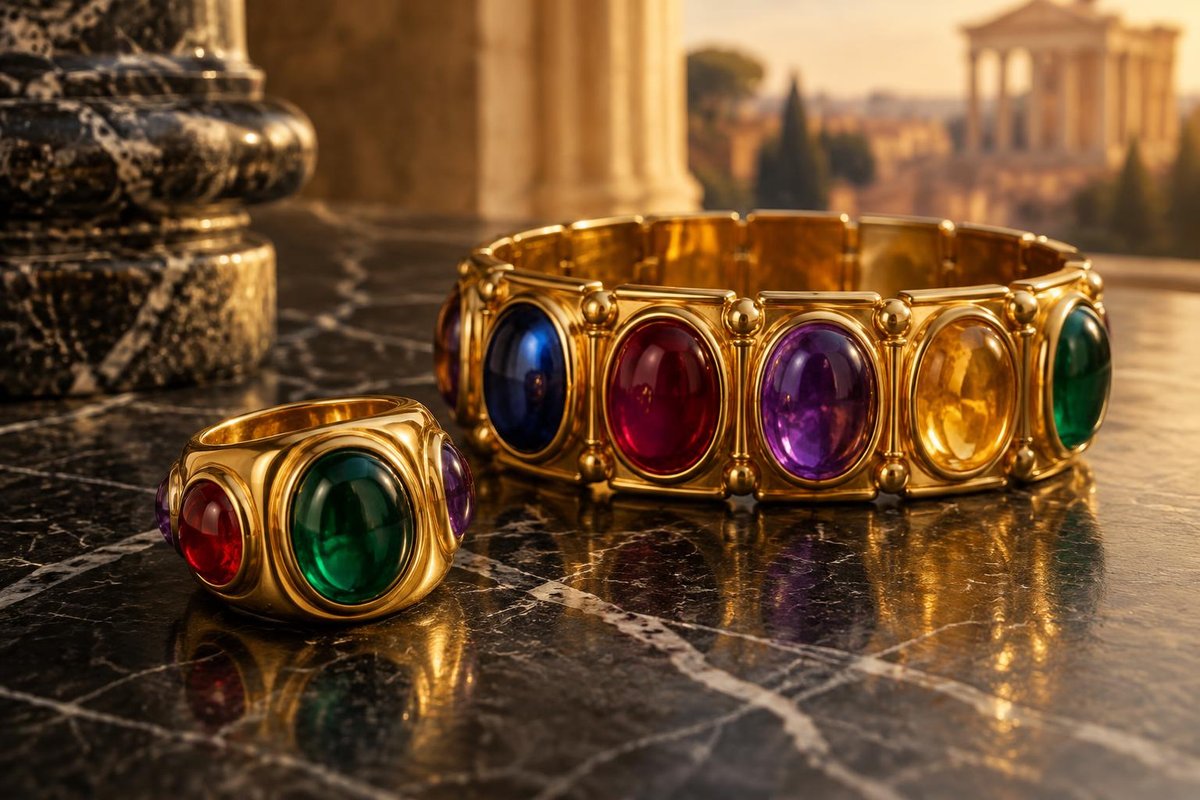
Source: Harper's Bazaar Arabia (Charlie Boyd, 13 November 2026), with context from Galerie Magazine and A&E Magazine (both 13 November 2026). The featured image is brand-neutral and AI-generated; it does not depict any piece from the collection.